Mostrando entradas con la etiqueta Grazalema. Mostrar todas las entradas
12 de diciembre de 2013
La fiesta senderista de la Petaquina
Texto y fotos por Antonio Morales Benítez
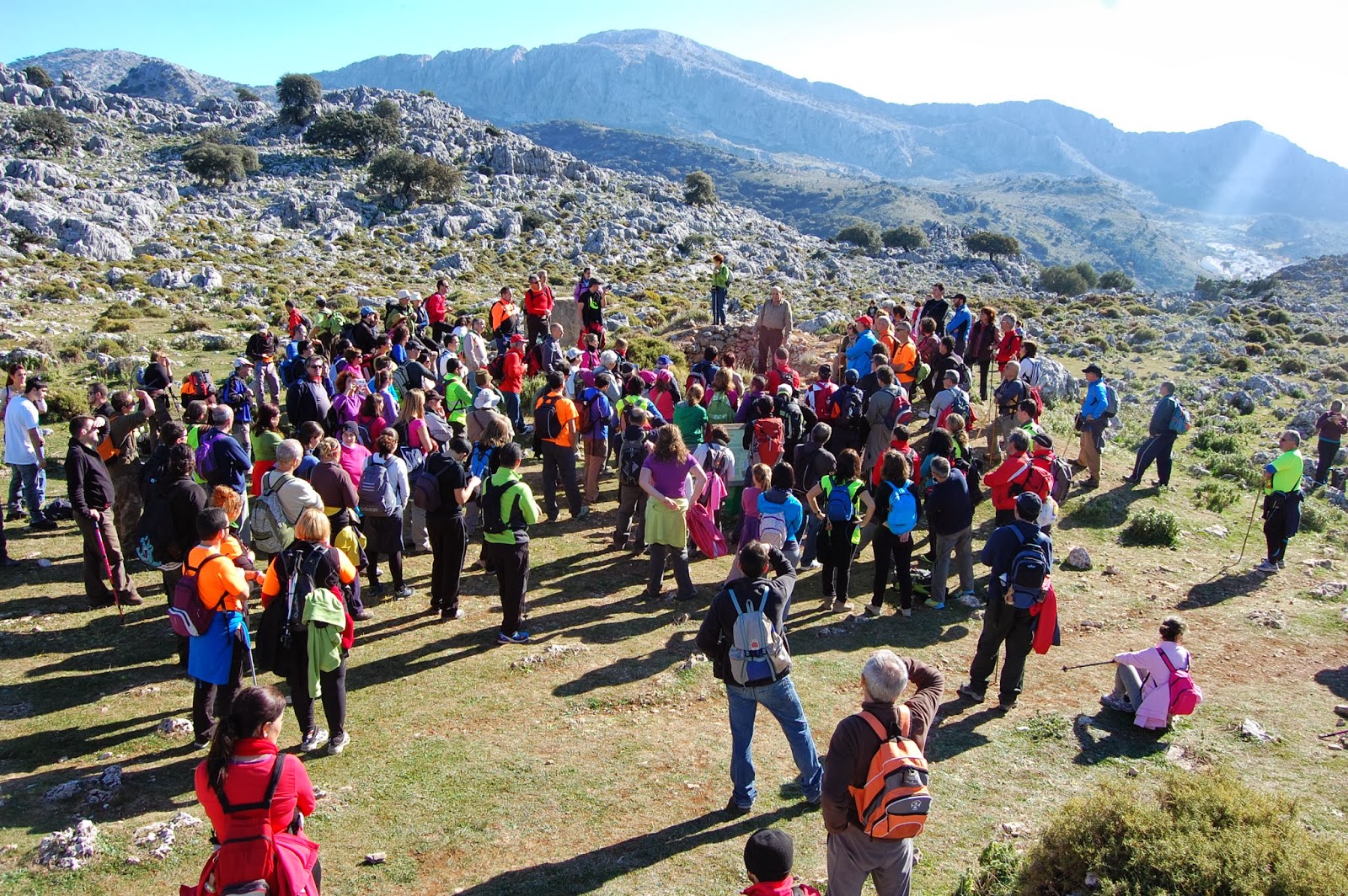
Unos doscientos senderistas participaron en la segunda edición de "La Petaquina". Una marcha solidaria organizada desde el año pasado por el Club Senderista 3 Caminos con el patrocinio de diversas instituciones públicas y privadas que se está convirtiendo en todo un referente de la serranía gaditana. Pocas actividades pueden presumir de aunar de una manera tan exitosa lo lúdico con lo deportivo. Además no conoce límites generacionales puesto que en esta edición participaron desde niños de 9 años hasta adultos de 79. Un espacio, pues, para compartir porque es apto para todas las edades ofreciéndonos a todos la oportunidad de aproximarnos al entorno natural. Sin duda una respuesta a la necesidad que tenemos de reconciliarnos con la naturaleza al mismo tiempo que nos socializamos.
Muchos no quisieron perderse este año "La Petaquina" y muy temprano empezaron a congregarse en la plaza del Ayuntamiento de Grazalema, donde los organizadores tenían previsto dar las primeras instrucciones y obsequiar a todos con productos de la repostería local y un recuerdo de la marcha. A continuación, una larga fila de participantes a lo largo del itinerario daría color al Parque Natural para unir las localidades de Grazalema, Benaocaz y Ubrique, situadas todas ellas en el corazón de esta reserva de la biosfera.
El primer tramo discurrió paralelo al cauce, todavía seco, del río Guadalete siempre en ascensión hasta el puerto del Boyar. Cuando se llegó al mirador el frío ya había desaparecido y las primeras luces del sol anunciaban un extraordinario día. La bajada y travesía del corredor del Boyar se pudo realizar sin incidencias, todos recordaban que el año pasado este tramo había sido algo complicado por el barro. En algunas partes el sendero se estrecha para caminar entre imponentes árboles. Pero el horizonte se abre cuando se llega a los llanos próximos al Salto del Cabrero, cuya falla es uno de los puntos geológicos más interesantes del Parque. Se aprovechó la parada en el puerto de Don Fernando para contar algunos aspectos de la historia de la comarca. Tras lo cual, se emprendió una nueva bajada por una zona muy pedregosa hasta atravesar el arroyo Pajaruco, muy cerca de Benaocaz. La interminable cadena solidaria recorrió su barrio nazarí camino del primer avituallamiento en la plaza de La Libertades. Allí el ambiente era plenamente festivo al confluir varios eventos, como la exposición "Arte para Todos" de pinturas, fotografías y grabados a cargo de un colectivo de artistas de la zona y una feria del libro de autor con la presencia de algunos escritores, y todo ello acompañado del plato de chorizo al vino que estaba esperando. Todo un regalo. La bajada por la Calera sería rápida para reagruparse otra vez todo el grupo a la entrada de Ubrique y continuar por la calle Villaluenga para recorrer su casco antiguo en dirección a la Peña Sevillista, donde estaba previsto el último avituallamiento.
La Organización de una actividad tan compleja sólo puede calificarse de modélica. Contó con un grupo entusiasta que en todo momento echó una mano y que sería correspondido con un comportamiento respetuoso con el entorno de todos los participantes.
En el horizonte de La Petaquina se mantiene el carácter solidario con el que nació y así lo recaudado con las inscripciones se destinará al Centro Ocupacional "El Curtido". Asimismo, a lo largo de la ruta se homenajeó al Consorcio de Bomberos de la Provincia de Cádiz, con especial mención al cuerpo de Ubrique, cuya unidad de rescate viene dando muchas muestras de eficacia hasta el punto de ser unos de los mejores aliados con que cuentan todos los senderistas que llegan a esta comarca. Sólo queda felicitar a estos ruteros ubriqueños empeñados en que abandonemos el sofá para que ventilemos nuestros pulmones, conozcamos nuestras riquezas naturales y nos reencontramos con los amigos dentro, todo ello, de un ambiente extraordinario y festivo. Enhorabuena.
12 de mayo de 2013
Erin O'Sullivan: La travesía Grazalema-Villaluenga-Ubrique desde un punto de vista americano
Reproducimos la colaboración en lengua inglesa de Erin O'Sullivan, americana que ejerce como docente en un instituto campogibraltareño, que realizó con nosotros la travesía Grazalema-Ubrique del pasado mes de abril. Este artículo está extraído de su blog, donde cuenta sus experiencias en España. Agradecemos a Erin el permiso para publicarlo aquí, transmitiendo una entusiasta versión en inglés sobre esta experiencia serrana.
Texto y fotografías por Erin O'Sullivan.
May 5, 2013
Los Pueblos Blancos (Part 2)–Villaluenga and Ubrique
Last weekend really was a pueblo-hoppin' weekend! In addition to finally getting to see the famous Castellar, I also got to take an incredible hike through the mountains and visit the villages of Villaluenga and Ubrique with fellow teachers from Sierra Luna...and about 100 others!
This was a hike for charity (and to demonstrate solidarity); people from all over the Cadiz region met in Ubrique--about an hour's drive from Los Barrios--early (very early!) Saturday morning. After grabbing some quick coffee or churros con chocolate (I passed on the later--the roads were a special kind of twisty-turny!), the hikers were loaded into buses and driven far up into the mountains. Then, we were on our own to walk back down to Ubrique. Now, initially, I misunderstood the nature of the hike. I knew we'd be walking between villages, but I thought it'd be at most a couple hours along the highway. No. Not even close.
What we did instead was far better. Our hike down the mountains took us over all sorts of terrain and history. Our trek, mostly through Llanos del Republicano, began at la Cañada Real de las Diez Pilas and continued through places with names that I lost track of--as did time (or so it felt like). The path we took crossed medieval village sites, Roman burial sites, haunted trees, and valleys sandwiched between mountains in such a way that it felt like if you stayed here long enough you really could step away from the rest of the world entirely. People kept asking me how I liked the hike. I couldn't form a proper answer in English or Spanish, I was too taken by the constantly changing environment. Es como una pelicula, seemed to be the best I could manage.
After a few hours hike, a weather turn from warm and sunny to cool and cloudy to straight up cold, we finally spotted beautiful Villaluenga del Rosario down below! It was a welcome sight as it meant a chance to rest and eat.
In typical Spanish fashion, cerveza was flowing and plentiful! I can't quite wrap my mind around the idea of beer going well with hiking, but perhaps they're on to something...it did seem to help warm people up! (Hey chica, one guy told me, stop taking pictures and drink a beer!) In addition, I learned that the village of Villaluenga is famous for their cheese and the town was at the tail end of a week-long cheese-fest--say what! So we got to sample some top-dog cheese varieties in the paseo. Now that's what I'm talking about!
By far, though, the best part was when we suddenly, in the middle of our tapas-rest-stop, had to move all of the plastic tables and chairs out of the center of the paseo to make way for a herd of sheep making its way through the village. (When I overheard someone say, we have to move; the sheep are coming, I was sure I'd lost something in translation...) It was like nothing else I've ever seen--looking up these narrow, white-walled streets to see thirty-some sheep huddled together and men with staffs and tweed flatcaps pushing them through.
Even better was that the sheep got to the middle of the square and decided they just couldn't handle the people staring at them any longer. They pushed themselves together into this huge clump of wool, stepping further and further into each other, and refusing, absolutely refusing, to be moved.
It took some time--and a lot of dragging--for the herders to get them going again. What an experience! This, for sure, will be in my top ten Spanish memories. And, man, Toto, we ain't in Chicago any more!
After the sheep excitement, we were charged up and ready to hit the trails again for the second half of the trek. That few hour walk I'd imagined was now a full-on all-day hike.
And it was about to hit some new levels of wow, as we crossed La Manga through harsh winds and light rain. La Manga is a six kilometer corridor between mountains, made up of limestone, and full of history. Every people that have ever crossed these lands have lived and worked this passage; I spent quite a bit of time watching the caves above us, wondering about all the people and animals that have surely lived there throughout the years. It didn't matter how cold it was--this part of the hike was simply stunning.
We were all pretty frozen by the time we got to end, but luckily our guides had already planned for that. Before we continued on to Ubrique, everyone was treated to a bit of sweet wine. I made the mistake of asking one of the teachers if the dark-colored sweet wine was sherry. After all, it tasted much the same to me. After a moment's hesitation I was told that yes, more or less, that's what it was. Dangerous words this near to dear Jerez--others immediately jumped in saying no, absolutely not, sherry came from Jerez and this that we were drinking now was much different. How, I couldn't begin to tell you, but there's several things you should never argue with a local about--and, in Andalucia, the almighty sherry is one. However one describes it, it was a) good and b) successful in warming us up as we headed into the last leg of the journey!
Heading on, we encountered a herd of goats being moved through the countryside--a very different experience than seeing the sheep pushed through town--as well as a trough of fresh mountain water.
The guides let us rest a bit here as they told us about the medieval path we were about to take. This narrow footpath we'd be taking was the way to get to bigger places like Ronda or Malaga. And it's been left to wear more or less naturally over time. It was something to mull that knowledge over while walking the path--the difficulty, the beauty, the length, and all such an unremarkable part of day-to-day life hundreds of years ago. Somehow, after the places we'd seen and the walks we'd taken thus far, hundreds of years ago was starting to seem less and less far away.
Though relatively straightforward, this part of the hike actually quite difficult. The rocks that had once been packed down into a solid pathway were now loose and would shift constantly under your feet. They were misshaped and uneven, sharp enough to feel even through hiking boots and were slippery with rain. There were big drops out of nowhere and unexpected holes. It was slow, careful going, until at least Ubrique came into view.
In Ubrique we had lunch, heard a wanna-be rock band, which led to a discussion where I tried to define "indie-rock" and how to classify groups as such, and then wandered the town, taking in the sights. (Also of note is that Ubrique's main industry is leather goods--so often you can buy a purse for relatively little money, just before they put the name-brand stamp on!)
I don't remember much of the way back home--winding roads or not, I was passed out in the backseat! It was a glorious day though, filled with incredible sights and history that I would have never even known I was missing if it wasn't for landing here the pueblos of Southern Spain--where the land, and its people, really are something incredible.
Texto y fotografías por Erin O'Sullivan.
May 5, 2013
Last weekend really was a pueblo-hoppin' weekend! In addition to finally getting to see the famous Castellar, I also got to take an incredible hike through the mountains and visit the villages of Villaluenga and Ubrique with fellow teachers from Sierra Luna...and about 100 others!
![]() |
| A fitting start to our solidarity hike! |
This was a hike for charity (and to demonstrate solidarity); people from all over the Cadiz region met in Ubrique--about an hour's drive from Los Barrios--early (very early!) Saturday morning. After grabbing some quick coffee or churros con chocolate (I passed on the later--the roads were a special kind of twisty-turny!), the hikers were loaded into buses and driven far up into the mountains. Then, we were on our own to walk back down to Ubrique. Now, initially, I misunderstood the nature of the hike. I knew we'd be walking between villages, but I thought it'd be at most a couple hours along the highway. No. Not even close.
What we did instead was far better. Our hike down the mountains took us over all sorts of terrain and history. Our trek, mostly through Llanos del Republicano, began at la Cañada Real de las Diez Pilas and continued through places with names that I lost track of--as did time (or so it felt like). The path we took crossed medieval village sites, Roman burial sites, haunted trees, and valleys sandwiched between mountains in such a way that it felt like if you stayed here long enough you really could step away from the rest of the world entirely. People kept asking me how I liked the hike. I couldn't form a proper answer in English or Spanish, I was too taken by the constantly changing environment. Es como una pelicula, seemed to be the best I could manage.
![]() |
| The Republican Plains |
![]() |
| Gathered around an ancient burial site. (Pic by Antonio Morales) |
After a few hours hike, a weather turn from warm and sunny to cool and cloudy to straight up cold, we finally spotted beautiful Villaluenga del Rosario down below! It was a welcome sight as it meant a chance to rest and eat.
![]() |
| Villaluenga, up ahead! |
![]() |
| Entering Villaluenga |
In typical Spanish fashion, cerveza was flowing and plentiful! I can't quite wrap my mind around the idea of beer going well with hiking, but perhaps they're on to something...it did seem to help warm people up! (Hey chica, one guy told me, stop taking pictures and drink a beer!) In addition, I learned that the village of Villaluenga is famous for their cheese and the town was at the tail end of a week-long cheese-fest--say what! So we got to sample some top-dog cheese varieties in the paseo. Now that's what I'm talking about!
By far, though, the best part was when we suddenly, in the middle of our tapas-rest-stop, had to move all of the plastic tables and chairs out of the center of the paseo to make way for a herd of sheep making its way through the village. (When I overheard someone say, we have to move; the sheep are coming, I was sure I'd lost something in translation...) It was like nothing else I've ever seen--looking up these narrow, white-walled streets to see thirty-some sheep huddled together and men with staffs and tweed flatcaps pushing them through.
![]() |
| Welcome to the pueblos! |
Even better was that the sheep got to the middle of the square and decided they just couldn't handle the people staring at them any longer. They pushed themselves together into this huge clump of wool, stepping further and further into each other, and refusing, absolutely refusing, to be moved.
![]() |
| Following the herd... |
![]() |
| Bah! |
![]() |
| Finally this guy had enough! ("Stubborn as a sheep" should totally be the new catch-phrase, btw.) |
![]() |
| Once you got enough of them moving, there was no turning back! |
It took some time--and a lot of dragging--for the herders to get them going again. What an experience! This, for sure, will be in my top ten Spanish memories. And, man, Toto, we ain't in Chicago any more!
![]() |
| Welcome to the Spanish pueblos! |
After the sheep excitement, we were charged up and ready to hit the trails again for the second half of the trek. That few hour walk I'd imagined was now a full-on all-day hike.
![]() |
| Onward! |
And it was about to hit some new levels of wow, as we crossed La Manga through harsh winds and light rain. La Manga is a six kilometer corridor between mountains, made up of limestone, and full of history. Every people that have ever crossed these lands have lived and worked this passage; I spent quite a bit of time watching the caves above us, wondering about all the people and animals that have surely lived there throughout the years. It didn't matter how cold it was--this part of the hike was simply stunning.
![]() |
| La Manga |
![]() |
| (Pic by Antonio Morales) |
We were all pretty frozen by the time we got to end, but luckily our guides had already planned for that. Before we continued on to Ubrique, everyone was treated to a bit of sweet wine. I made the mistake of asking one of the teachers if the dark-colored sweet wine was sherry. After all, it tasted much the same to me. After a moment's hesitation I was told that yes, more or less, that's what it was. Dangerous words this near to dear Jerez--others immediately jumped in saying no, absolutely not, sherry came from Jerez and this that we were drinking now was much different. How, I couldn't begin to tell you, but there's several things you should never argue with a local about--and, in Andalucia, the almighty sherry is one. However one describes it, it was a) good and b) successful in warming us up as we headed into the last leg of the journey!
![]() |
| Salud! (Pic by Antonio) |
Heading on, we encountered a herd of goats being moved through the countryside--a very different experience than seeing the sheep pushed through town--as well as a trough of fresh mountain water.
![]() |
| Our group--cold but happy! |
The guides let us rest a bit here as they told us about the medieval path we were about to take. This narrow footpath we'd be taking was the way to get to bigger places like Ronda or Malaga. And it's been left to wear more or less naturally over time. It was something to mull that knowledge over while walking the path--the difficulty, the beauty, the length, and all such an unremarkable part of day-to-day life hundreds of years ago. Somehow, after the places we'd seen and the walks we'd taken thus far, hundreds of years ago was starting to seem less and less far away.
![]() |
| The medieval path in its best condition. |
Though relatively straightforward, this part of the hike actually quite difficult. The rocks that had once been packed down into a solid pathway were now loose and would shift constantly under your feet. They were misshaped and uneven, sharp enough to feel even through hiking boots and were slippery with rain. There were big drops out of nowhere and unexpected holes. It was slow, careful going, until at least Ubrique came into view.
![]() |
| Hooray, Ubrique! We found you! |
In Ubrique we had lunch, heard a wanna-be rock band, which led to a discussion where I tried to define "indie-rock" and how to classify groups as such, and then wandered the town, taking in the sights. (Also of note is that Ubrique's main industry is leather goods--so often you can buy a purse for relatively little money, just before they put the name-brand stamp on!)
![]() |
| Ubrique streets |
![]() |
| Ubrique streets |
![]() |
| Paseo in Ubrique |
![]() |
| Literally, the best tasting water I've ever had. Fresh from the mountains. |
I don't remember much of the way back home--winding roads or not, I was passed out in the backseat! It was a glorious day though, filled with incredible sights and history that I would have never even known I was missing if it wasn't for landing here the pueblos of Southern Spain--where the land, and its people, really are something incredible.
Suscribirse a:
Entradas (Atom)